
Earth Science
Placement Information
Placement Process
One critical factor for restful learning is the proper placement of students. If you are unsure which level is the best fit for your student, reach out to the instructor you are considering. Once registered, anticipate contact regarding placement evaluations from instructors by May 15th and throughout the summer. Students must be enrolled to enter the placement process. Early placement exams may allow time for tutoring or additional review based on the outcomes. See more about placement evaluations in our Student-Parent Handbook.
Novare Science Placement
If placement evaluation is needed, please anticipate contact from instructors by May 15th and throughout the summer. Students must be enrolled in a course to receive a placement assessment.
Learn more about the Novare Science placement.
Required Materials:
Books and supplies are not included in the purchase of the course. These resources are listed to help inform your decision-making as you make course selections and build your course schedule. Please reach out to the instructor if you have any questions about materials.
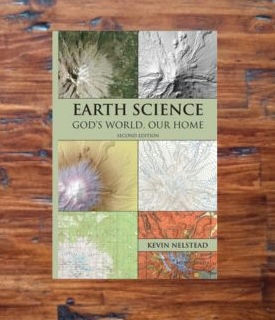
- Earth Science: God’s World, Our Home, 2nd Ed., by Kevin Nelstead, Novare Science and Math
- Notebook paper
- A binder or binder section devoted to the course
- Ruler
- Graph Paper
- Lab Kit for use with Novare Earth Science
.png?cache=false)
Mr. Chris Hall
[email protected]Chris Hall has a BA in Philosophy from Gettysburg College and an MAT in Elementary Education from Towson University. He has been a classroom educator and administrator for 30 years, having served in public, independent, and classical schools. He is a lifelong practitioner of several common arts, a musician, an amateur radio operator (WR5WD), and the Founder of Always Learning Education, an organization dedicated to teaching, learning, and propagating the common arts.
Chris lives on a small, homesteaded farm in central Virginia with his wife and three homeschooled sons.
.png?cache=false)
Mrs. Danielle Adams
[email protected]Danielle (Dani) Adams, a graduate of Hillsdale College, holds a BS in Biochemistry and a minor in Jazz Music. Mrs. Adams has worked in various educational vocations for 13 years. She has also served as the vice-president of multiple Navy adjacent non-profit organizations during her time as an active-duty military spouse.
For the last 2 years she has worked in brick-and-mortar schools in Hampton Roads both as a teacher and curriculum director and helped to found a local classical school in Portsmouth, Virginia. She currently resides in Norfolk, Virginia with her husband, 4 children, 7 chickens, and dog named Arleigh Bark. A member of the Anglican Church in North America (ACNA) since 2016, Dani serves on the vestry of her local Anglican parish, St. Alban's, and has been an active member of the parish since its founding 2 years ago.
As an educator, Dani seeks to orient students toward the divine testimony God gives us through both nature and number, and prepare students to think critically about the nature of Truth. In the words of Kate Comstock- ""perhaps, half the falsehood in the world is due to a lack of power to detect truth and express it."" She desires to give her students both empirical knowledge and an understanding of the epistemology behind it. Her guiding principal as a scientist and educator comes from the words of St. Augustine: “Fides quaerens intellectum,” faith seeking understanding.
Quarter 1
- Introduction to Earth Science
- Earth’s Orbit and Seasons
- Phases of the Moon and Eclipses
- Celestial Navigation
- Latitude and Longitude
- Map Projections
- Topographic Maps
- Atoms, Elements, and Crystals
Quarter 2
- Gemstones
- Mineral Classification and Properties
- Mineral Resources and Mines
- The Rock Cycle
- Igneous Rocks
- Sedimentary Rocks
- Metamorphic Rocks
- Fossil Fuels
Quarter 3
- Continental Drift and Plate Tectonics
- Plate Boundaries and Associated Landforms
- Volcanoes
- Earthquakes
- Interior of the Earth
- Sedimentary Processes: Transportation and Deposition, Differential Weathering
- Soils
- Soil Testing
- Oceanography- Definitions, Seawater, Currents and Waves, Tides
Quarter 4
- Marine Life
- The Atmosphere- Properties, Energy, Circulation
- Clouds and Precipitation
- Air Masses and Fronts
- Severe Weather
- Weather Forecasting
- Geologic Time, Relative Age, and Absolute Dating
- Fossils
- Overview of Earth’s Geologic History (Eras, Ages, Periods, Epochs)
 Computer: You will
need a stable, reliable computer, running with a processor with a speed of 1 GHz or better
on one of the following operating systems: Mac OS X with Mac OS 10.7 or later; Windows 8,
7, Vista (with SP1 or later), or XP (with SP3 or later). We do not recommend using an
iPad or other tablet for joining classes. An inexpensive laptop or netbook would be much
better solutions, as they enable you to plug an Ethernet cable directly into your computer.
Please note that Chromebooks are allowed but not preferred, as they do not support certain
features of the Zoom video conference software such as breakout sessions and annotation,
which may be used by our teachers for class activities.
Computer: You will
need a stable, reliable computer, running with a processor with a speed of 1 GHz or better
on one of the following operating systems: Mac OS X with Mac OS 10.7 or later; Windows 8,
7, Vista (with SP1 or later), or XP (with SP3 or later). We do not recommend using an
iPad or other tablet for joining classes. An inexpensive laptop or netbook would be much
better solutions, as they enable you to plug an Ethernet cable directly into your computer.
Please note that Chromebooks are allowed but not preferred, as they do not support certain
features of the Zoom video conference software such as breakout sessions and annotation,
which may be used by our teachers for class activities.
High-Speed Internet Connection:
You will also need access to high-speed Internet, preferably accessible via Ethernet
cable right into your computer. Using Wi-Fi may work, but will not guarantee you the optimal
use of your bandwidth. The faster your Internet, the better. We recommend using a connection
with a download/upload speed of 5/1 Mbps or better. You can test your Internet connection here.
Webcam: You may
use an external webcam or one that is built in to the computer. Webcam Recommendations:
Good (PC only) | Best (Mac and PC)
Headset: We recommend
using a headset rather than a built-in microphone and speakers. Using a headset reduces the
level of background noise heard by the entire class. Headset Recommendations: USB | 3.5mm
Zoom: We use a web
conferencing software called Zoom for our classes, which enables students and teachers to
gather from around the globe face to face in real time. Zoom is free to download and easy
to use.  To
download Zoom:
To
download Zoom:
- Visit zoom.us/download.
- Click to download the first option listed, Zoom Client for Meetings.
- Open and run the installer on your computer.
- In August, students will be provided with instructions and a link for joining their particular class.
Scanner: In this
class, students frequently submit homework assignments by scanning pages from their workbooks.
Students and/or their parents should have easy access to a scanner and the ability to use it.
Step 1
Step 2
Step 3
Step 4
Explore our courses!
First, read the available course descriptions, noting prerequisites, target grades, and course objectives. If you think your student is prepared for the course, go ahead and register. After registration, a placement assessment may be provided to students, depending on the course and the student's previous enrollment with Scholé Academy. Registration is finalized when the student's placement assessment has been returned by the course instructor with placement confirmation.
All Courses | By Grade
Read the Student-Parent Handbook.
Please take careful note of our teaching philosophy, our technology requirements, our school policies, the parent agreement, and the distinctions between our grade levels.
Double-check the course section dates and times.
Make sure they don't conflict with other activities in your schedule or other courses you are purchasing. Our system will not catch double-bookings!
You're ready to add course selections to your cart!
Our Assistant to the Principal will be in touch with you after your enrollment to help you with next steps, including any placement evaluations that may be required for your course selections.
This registration will be finalized when the student's placement assessment has been returned by the course instructor with placement confirmation.